


How HubSpot Data Hub Unifies CRM and Warehouse Data in 30 Days
This article presents a pragmatic 30-day blueprint for unifying a data warehouse (e.g., Snowflake) with HubSpot Smart CRM using Data Hub. It explains how to standardize match keys, enforce data quality, and activate workflows to cut renewal prep time, reduce forecast error, and eliminate duplicates, while outlining enabling architecture, KPIs, risks, and ROI modeling needed to scale.

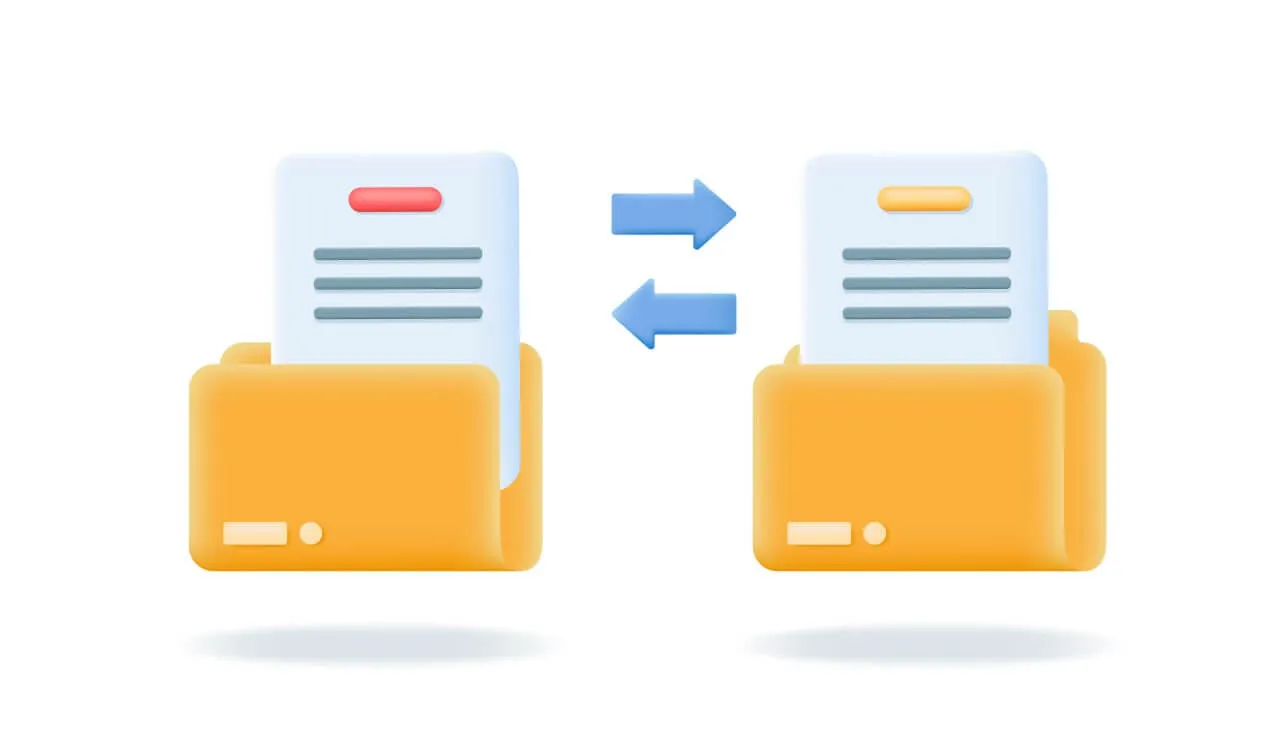
HubSpot Data Hub connects customer, product, and transaction data from cloud storage and warehouses directly into Smart CRM, allowing operational teams to use analytics-grade data without custom pipelines (1). Data Hub Enterprise extends this by syncing curated Snowflake tables into HubSpot records so segments, workflows, and dashboards run on the same definitions trusted in BI (2). The following 30-day blueprint shows how unified data accelerates quote, renewal, and service motions while supporting a measurable ROI model (4).
Fragmented systems slow quoting, campaign targeting, and service resolution. Lead-to-cash performance hinges on consistent master data, entitlements, and transactions across marketing, sales, finance, and analytics; when definitions diverge, approval loops lengthen and forecast error grows (3). A warehouse can hold the truth, but value realizes only when those attributes are activated in CRM. Data Hub closes this loop by connecting, cleaning, and unifying data so frontline processes reference the same keys, formats, and rules used in analytics (5).
Lead-to-cash refers to the continuum from demand generation through order, fulfillment, invoicing, and payment. Automation replaces manual reconciliations with rules, reduces handoffs, and aligns CRM with finance and analytics. Standardized objects, governed workflows, and synchronized facts enable faster approvals, accurate billing, reliable revenue recognition, and clearer pipeline health (3).
(internal example) A mid-market B2B subscription vendor unified warehouse and CRM in 30 days. Days 1–10 established a “golden customer” schema, mapped Snowflake views to HubSpot companies and custom objects, and fixed match keys (domain and external ID). Days 11–20 enforced formatting and dedupe rules, activated one-way Snowflake→HubSpot syncs for ARR and usage, and implemented drift and lineage checks. Days 21–30 turned attributes into action: renewal-risk triggers on usage drops, expansion offers on adoption thresholds, and an executive dashboard aligned to pipeline, renewal, and expansion. After 45 days, renewal prep time fell by 20–25%, forecast accuracy improved by 12–18% on renewal cohorts, and duplicates declined by 30% (measurable).
Lead-to-cash tooling has evolved from siloed point integrations to iPaaS syncs, then to identity-oriented CDPs. In 2025, the prevalent pattern pairs a warehouse as the analytical source of truth with an operational CRM for activation, connected by native data products that minimize batch lag and custom ETL (1)(2). Data Hub reflects this shift by emphasizing unification and data quality, ensuring that downstream automation remains reliable even as schemas change (5).
Common applications underscore the impact. Revenue operations can push product usage and entitlement data from Snowflake into CRM to trigger expansion plays and proactive save motions (2). Marketing operations can combine warehouse-calculated ICP scores with engagement signals to prioritize audiences and suppress churn-risk contacts, improving spend efficiency. Service teams can surface telemetry and SLA flags on tickets, cutting escalations and time-to-resolution. Analytics benefits from consistent keys across CRM and BI, reducing reconciliation cycles and executive confusion.
Four enabling components make the approach durable. First, warehouse and storage connections: Data Hub supports Snowflake, BigQuery, and cloud storage so curated tables and files land in CRM with governance intact (1). Second, data quality and unification: profiling, formatting, deduplication, and identity resolution keep master data trustworthy (5). Third, governance: external IDs, match-key policies, lineage visibility, and drift monitoring stabilize syncs as schemas evolve. Fourth, activation: workflows, segments, and reports consume unified attributes to drive approvals, notifications, and dashboards.
A pragmatic 30-day plan focuses scope and metrics. Limit the pilot to one outcome (e.g., renewal accuracy) and one domain (accounts plus entitlements). Constrain the build to five warehouse views and no more than three CRM objects. Allocate one week for design, two for build and QA, and one for activation and measurement. Track duplicate rate (<1%), field fill rate (>95% on critical attributes), renewal prep time (target ≥15% reduction), and forecast error on the pilot segment (target −10% to −20% relative). Lock match keys early, document transformations, validate daily, and schedule incremental syncs aligned to business cadences.
Investment and ROI considerations are straightforward. Costs concentrate in the Data Hub Enterprise tier for warehouse integrations and record-level syncs plus a limited allocation of data engineering time (1)(2). Benefits accrue from fewer manual reconciliations, faster approvals, and more precise campaigns and service responses. HubSpot’s ROI reporting indicates many customers achieve productivity and revenue gains within the first year, with a majority reporting positive ROI; a TEI-style business case can quantify benefits, costs, risk ranges, and payback before scaling (4).
Unifying CRM with warehouse data no longer requires heavy ETL projects. A focused 30-day pilot can deliver measurable gains in accuracy and speed while establishing the governance and validation patterns needed for scale. With native connections, quality controls, and activation surfaces, Data Hub translates analytics truth into day-to-day execution across the lead-to-cash continuum (1)(2)(5).
Frequently Asked Questions (FAQ)
Q1. What should be unified first?
A. Start with the golden customer record, product catalog, and entitlement/ARR facts; these power renewals and expansion and simplify reporting.
Q2. How is success measured?
A. Use pre-pilot baselines and track duplicate rate, field completeness, renewal prep cycle time, and forecast error on the pilot cohort; all should show measurable improvement.
Q3. What are common risks?
A. Unstable match keys, schema drift, and premature activation of noisy attributes; mitigate with external IDs, column contracts, staged rollouts, and daily validation checks.
Sources
1. https://www.hubspot.com/products/data/cloud-data-storage-integrations
2. https://knowledge.hubspot.com/integrations/connect-hubspot-and-snowflake-data-sync
3. https://www.mckinsey.com/capabilities/operations/our-insights/operations-blog/lead-to-cash-the-elephant-in-the-room
4. https://www.hubspot.com/roi
5. https://www.hubspot.com/company-news/connect-your-data